
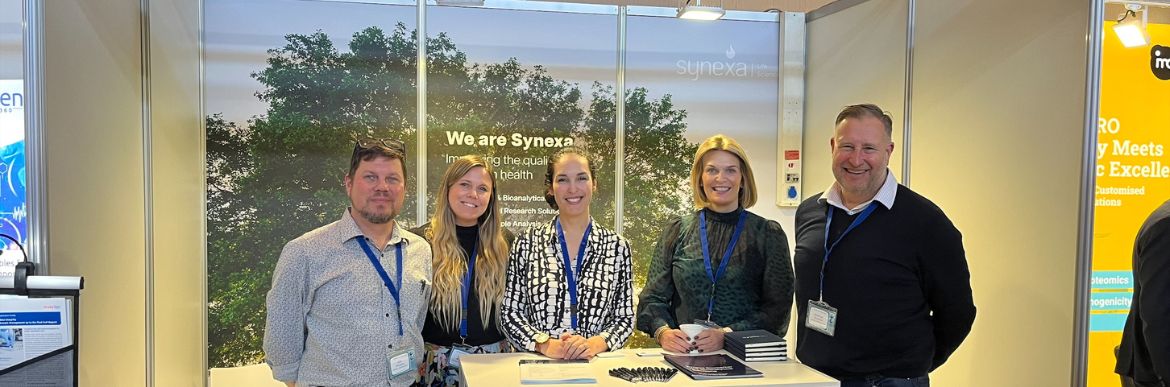

The 18th European Bioanalysis Forum (EBF) Open Symposium (OS), themed “Tuning in to Tomorrow – Science in High Definition,” was, as always, one of the highlights of my annual events calendar. However, during one of the tea breaks, I overheard another attendee saying that nothing new had been discussed yet, and it’s “still all the same old topics”.
To some extent, they were correct: many of the same topics have been tabled for discussion in recent years. But for me, this year felt like a real turning point because everything the field has been discussing for the last four years is now being implemented, and we are even seeing regulatory commentary on some of the altered approaches we have been discussing. It’s always exciting when talk turns into action, and I have no doubt the data shared this year will give companies still feeling hesitant the push they need to make positive changes.
Here are my general takeaways from the EBF Symposium this year:
Overarching Themes
A unifying message across EBF 2025 was that bioanalytical science is transitioning from technical execution to decision support. For years, our industry has focused on generating accurate data. Now, the conversation is about how that data drives decisions across clinical development and regulatory pathways. This evolution, powered by automation, AI integration, and hybrid analytical techniques, promises higher throughput and smarter workflows.
This shift signals a major milestone: innovative approaches are no longer theoretical – they are being evaluated, challenged, and increasingly accepted, provided that documentation is robust and scientific justification is sound.
Notably for me (looking through the lens of a CRO), several experts emphasised that bioanalytical issues do not delay approvals. If a therapy is safe and effective, it will reach patients; in cases of disagreement, regulators may issue post-marketing requirements but rarely block progress. This fear of causing submission delays is a significant factor in CRO risk assessment strategies, and reiterating the above should provide stakeholders with greater confidence in their science-driven decision-making.
That segues nicely into another recurring theme: collaboration. Pharma companies, CROs, and regulators are engaging earlier and more strategically. This is critical because science-driven approaches, such as adaptive ADA validations, require upfront alignment. We reviewed numerous case studies of updated internal strategies and risk assessments, and personally this was the most exciting progress to date.
Key Highlights
While many themes were familiar, there were three major spotlights for me:
Singlicate Testing: From Debate to Data-Driven Reality
For years, the field has debated singlicate analysis. In 2025, the tone shifted fully from ‘why’ to ‘why not’. The volume of data presented strongly supports its scientific validity and indicates that the perceived risk is negligible.
For CROs and sponsors alike, the implications are significant:
- Increased throughput and faster TAT
- Reduced reagent burden and greener footprint
- Less sample volume required, which is especially important in vulnerable populations
For Synexa, singlicate has always been an option, but we will be adopting a first-intention design that uses singlicate as the default. There are always exceptions to rules, and everything should be scientifically and biologically justified. But with all the data pointing in an obvious direction, we are confident that singlicate is as pragmatic and solid a strategy as a standard approach.
ADA Testing: The 3-Tier Paradigm Is Being Rewritten
The ADA conversations are always lively, divided, often philosophical, and are a personal favourite of mine. The traditional 3-tier workflow is being challenged more aggressively than ever, which is something we have been doing for almost five years now. As a CRO, this can be a real challenge, as we aren’t always involved early enough to help Sponsors through strategic discussions with the regulators. But what we have learned, is that with clear documentation and sound justification, the regulators (in our experience) have been open to alternative approaches.
As an industry, we are increasingly exploring:
- 1- or 2-tier ADA workflows
- Magnitude-based S/N reporting instead of titre values
These shifts redistribute effort: less routine confirmatory/titre work, but far greater front-loaded scientific justification. CROs must be ready to support:
- Context-of-Use–driven validation design
- Risk assessments defining false-positive rate strategies
- S/N–to–clinical relevance mapping
- Predefined fallback criteria and triggers for confirmatory analysis
In my view, CROs need to adapt to ensure they are capable of generating integrated ADA narratives, linking S/N bands to PK/PD or efficacy, and “zooming out” to ensure they are squeezing all the value possible out of the data they generate.
As mentioned, this is not something new for us at Synexa, but I often find Sponsors are surprised to hear they won’t just be receiving a POS/NEG report from us, which tells me this is still far from the norm. I’m excited to see this progress, and for the industry as a whole to start generating and using data in the most valuable way possible. This is the best way for us all to achieve our goal of getting vital therapies to those who need them.
AI in Bioanalysis: Validation, Governance & Real-World Use Cases
AI was everywhere at EBF, albeit with equal parts enthusiasm and confusion – there is still a lot left to be learned and discussed. But whilst last year’s discussion focused more on the hypothetical, this year there were two sessions filled with case studies on how AI tools are already being implemented across all aspects of our industry.
Across the successes and failures in the case studies, I identified “stacking” as a key factor in the success of AI tools. Instead of asking AI to solve complex tasks in one go, break them into micro-tasks and stack multiple simple agents. This approach simplifies validation, reduces the risk of AI hallucinations, and is practical and scalable. My final thought here is that organisations that treat AI not as an experiment but as infrastructure will win.
Conclusion
EBF OS 2025 made one message abundantly clear: bioanalysis is evolving faster than ever, but the direction is coherent, scientific, and opportunity-rich.
The organisations that will thrive are those willing to:
- Adopt evidence-backed innovations early
- Build rigorous AI governance
- Replace legacy habits with Context-of-Use–driven strategies
- Treat documentation and justification as real-time scientific storytelling
For us, these takeaways confirm that Synexa’s long-term strategy – to lead in scientific innovation and integrated data interpretation – is exactly where the industry is heading. I, for one, am very excited to be part of the future of bioanalysis.
FAQ
How is bioanalysis evolving from operational execution to decision‑support?
Bioanalysis is increasingly valued for its ability to inform strategic decisions rather than simply produce measurements. Synexa supports this shift by embedding mechanistic interpretation and clinical context into analytical design. Biomarker insights and PK/PD connections help shape dose selection and trial strategy. This elevates bioanalysis into a core decision‑making function.
How does Synexa address the growing expectation for context‑rich bioanalytical data?
Synexa integrates disease biology, biomarker strategy, and therapeutic mechanism into assay planning from the outset. This ensures analytical outputs directly support clinical and translational questions. Multi‑omic data integration strengthens interpretation and highlights mechanistic relevance. The result is more meaningful datasets for development teams.
Why is cross‑platform data harmonisation increasingly important in regulated studies?
As studies incorporate diverse biomarker modalities, aligned datasets are essential for reliable interpretation. Synexa uses consistent validation frameworks and quality systems across technologies such as LC‑MS/MS, ligand‑binding assays, and proteomics. This harmonisation improves comparability and strengthens regulatory submissions. It ensures all analytical components support a unified evidence package.